


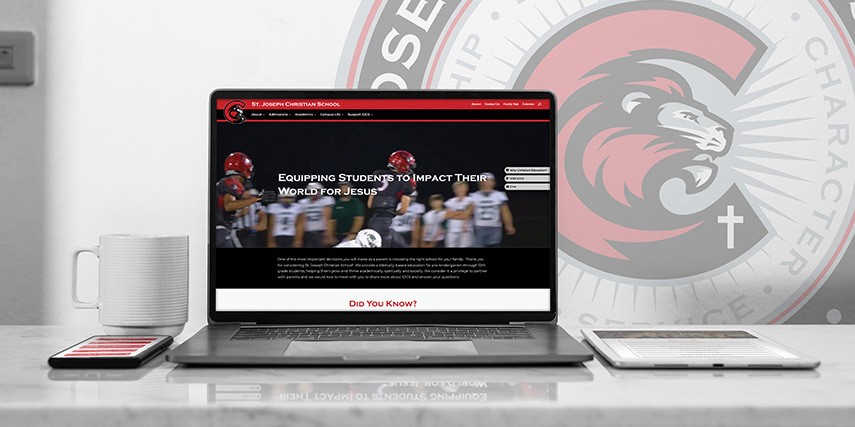
The role of your company’s website in driving overall business success has evolved significantly. Today, consumers expect far more from the websites of the brands they trust. So as you approach your redesign, what key elements should you prioritize?
Value First
In traditional publishing terms, your website should communicate its value proposition “above the fold.” You have a short window to capture a visitor’s attention and convey that value effectively. This requires a clear understanding of your audience so you can present information that is engaging, relevant and useful.
The most critical elements of above-the-fold content include a compelling headline supported by a concise subheading, impactful visuals and a clear call to action that guides visitors toward the next step.
Fast Load Times
Speed is key to keeping your visitors on the page. Most consumers today expect the sites they visit to fully load within one to three seconds. Go beyond that and you’re going to get dropped.
To ensure faster load times, use next-gen image formats, such as WebP and AVIF. Make sure your code is lean and your plugins are optimized.
Accessibility Matters
Approximately 25% of adults in the United States live with a disability. Regardless of whether they are part of your current customer base, organizations have a responsibility to ensure their websites are accessible and navigable for all users. While this topic can be explored in greater depth, a strong foundation begins with adhering to WCAG 2.2 guidelines. Key practices include (but are not limited to):
- Minimizing unnecessary form friction by avoiding repeated data entry
- Designing interactive elements to be intuitive and easy to use
- Treating accessibility as an ongoing commitment rather than a one-time update
- Ensuring focused elements are not hidden from view
- Maintaining visible keyboard focus indicators so users can easily track their position on the page
Get Serious About SEO
AI has changed how businesses approach SEO, but it’s still an important factor in your website. Search engines need to be able to understand your site, which is why clear and well-structured content is so important.
Pay attention to some fundamentals, such as optimized titles, meta descriptions and headings. Audit your schema markup for services and locations. Use reputable backlinks and make sure your content matches what users are actually searching for. In short, don’t approach SEO as an optional add-on, because it remains an important visibility requirement.
The Checklist
What defines a “modern” website in 2026? It is characterized by a holistic, user-centered approach that starts with clear, human-centered content. High-performing websites combine fast load times, strong accessibility standards and trustworthy design with intuitive functionality and clear user journeys.
Do you need assistance with your company’s website? Our team of experts at SJC Marketing will overhaul your site so it meets the expectations of today’s audience. Contact us and let’s get started.